
Selling a home in Yorba Linda, Anaheim Hills, Chino Hills, Corona, and Eastvale is one of the largest financial transactions most people will ever make. And yet, every year, sellers in Yorba Linda, Anaheim Hills, Chino Hills, Corona, and Eastvale leave thousands of dollars on the table — or watch their deals fall apart — because of mistakes that are entirely preventable.
After working with sellers across Yorba Linda, Anaheim Hills, Chino Hills, Corona, and Eastvale, these are the five mistakes I see most often. Each one is avoidable. Each one is costly. And each one becomes significantly less likely when you go in prepared.
Mistake #1: Overpricing the Home
This is the single most common — and most expensive — mistake sellers make. It feels counterintuitive: if you price high, shouldn't you have room to negotiate down? In theory, yes. In practice, no.
Buyers in the 2026 local market are well-informed. They're watching Zillow and Redfin daily. They know what homes are selling for in your neighborhood. When a home is overpriced, buyers don't make low offers — they simply skip your listing and move on to the next one.
Homes that sit on the market for 30, 45, or 60+ days develop a stigma. Buyers start wondering what's wrong with it — even if the only problem was the price.
What happens when you overprice:
- Low showing activity in the critical first two weeks on market
- Days on market accumulate, triggering buyer skepticism
- Price reductions signal desperation and invite low-ball offers
- You ultimately sell for less than you would have with accurate pricing from day one
The fix: Pull the last 90 days of closed comparable sales within half a mile. Price at or slightly below that range to generate competition. A well-priced home in a desirable neighborhood still attracts multiple offers in 2026 — an overpriced one does not.
Mistake #2: Neglecting Presentation and Photography
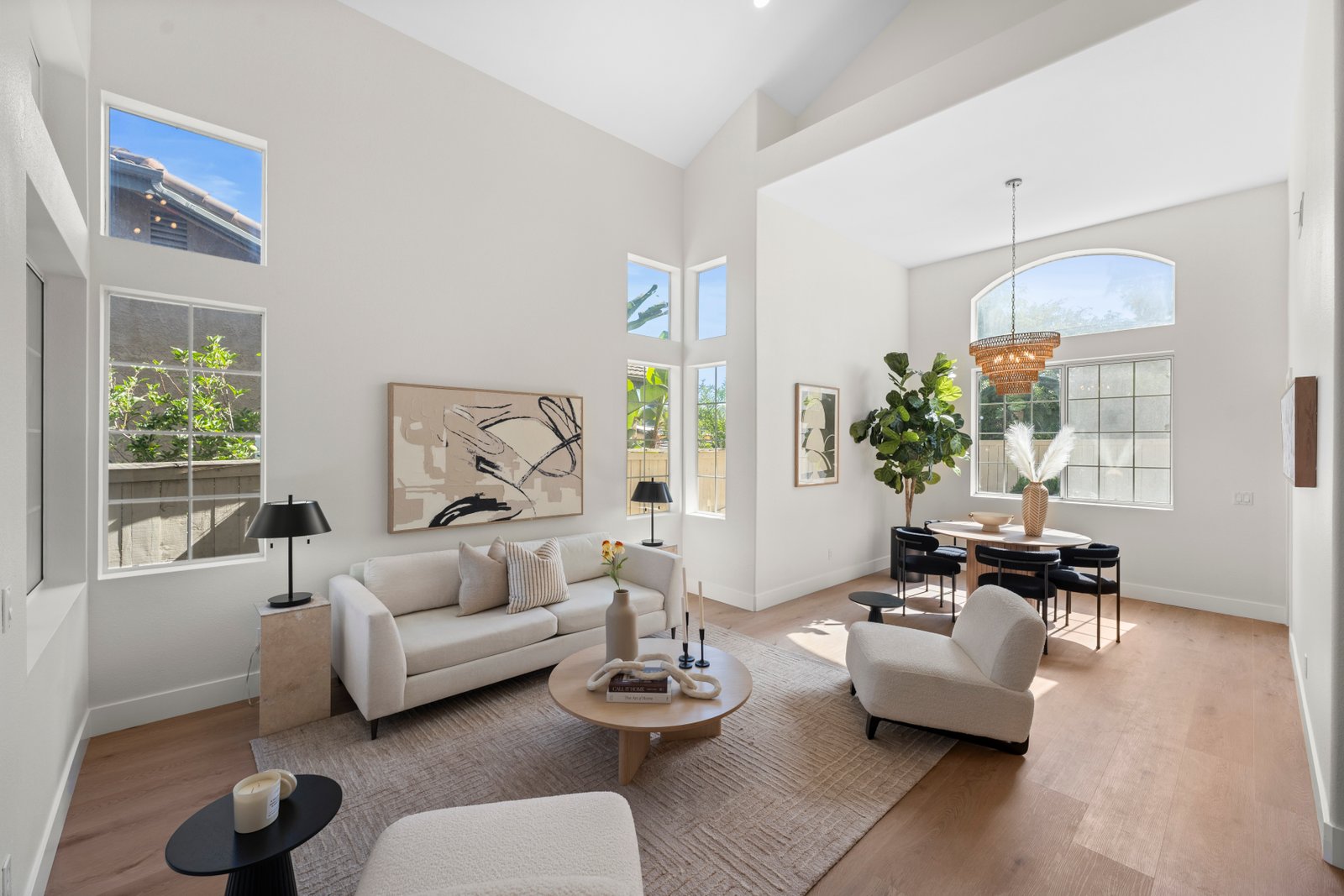
Over 95% of buyers begin their home search online. The photos of your home are your first showing — and for many buyers, they are the only showing that determines whether they schedule an in-person visit at all.
Sellers who use iPhone photos, skip staging, or list a cluttered, unclean home are handing their competition a significant advantage. In a market where buyers are scrolling through dozens of listings, poor photos are a deal-killer before the conversation even starts.
What poor presentation costs you:
- Fewer showings — which means fewer offers and less negotiating leverage
- Lower perceived value — buyers anchor their offer price to what they see online
- Longer time on market — which leads to price reductions (see Mistake #1)
The fix: Invest in professional photography — it typically costs $200–$400 and pays for itself many times over. Deep clean the home, declutter every room, apply fresh neutral paint where needed, and maximize curb appeal before the photographer arrives. For higher-priced homes, consider twilight shots, drone photography, and a 3D virtual tour.
Mistake #3: Failing to Complete or Disclose Known Issues
California has some of the strictest real estate disclosure laws in the country. As a seller, you are legally required to disclose all known material defects — anything that could affect the value or desirability of the property. Failing to disclose is not just an ethical issue; it is a legal liability that can follow you long after the closing.
Many sellers make the mistake of staying quiet about issues they know about — a leaky roof that was patched but not fully repaired, unpermitted additions, a history of flooding in the garage, or a neighbor dispute — hoping buyers won't notice or ask. In most cases, these issues surface during inspection anyway. But when they surface after closing, the consequences are far more serious.
Post-closing lawsuits for non-disclosure are among the most common real estate disputes in California. The cost of litigation dwarfs whatever you thought you were protecting by staying silent.
What you are required to disclose in California:
- All known material defects (Transfer Disclosure Statement — TDS)
- Unpermitted work or additions
- Any death on the property within the last 3 years
- Natural hazard zone designations (fire, flood, earthquake fault)
- HOA special assessments or pending litigation
- Neighborhood noise, nuisance, or dispute issues
The fix: Complete your disclosure package thoroughly and honestly before listing. When in doubt, disclose it. A buyer who knows about an issue upfront can price it in — a buyer who discovers it after closing will call their attorney.
Mistake #4: Accepting the Highest Offer Without Evaluating the Full Picture
When multiple offers come in, it's tempting to simply accept the highest number and call it done. This is a mistake that catches many sellers off guard — sometimes resulting in a deal falling apart weeks into escrow and costing you weeks of lost time, carrying costs, and emotional energy.
The purchase price is just one variable in an offer. A high-priced offer from a poorly qualified buyer with maximum contingencies and a slow-moving lender can easily underperform a slightly lower offer from a strong, motivated buyer who is ready to close in 21 days.
What to evaluate beyond price:
- Down payment size — larger down payments signal a stronger buyer and reduce appraisal risk
- Lender quality — a pre-approval from a reputable local lender carries more weight than an online pre-qual
- Contingency lengths — shorter inspection and loan contingency periods reduce your exposure
- Earnest money deposit — a larger EMD signals commitment and provides more protection if the buyer walks
- Close of escrow timeline — does it align with your move-out needs?
- Requests for personal property, credits, or seller concessions — these reduce your net proceeds
The fix: Compare offers on net proceeds and likelihood to close — not just the top-line number. A $10,000 lower offer from a cash buyer with no contingencies and a 21-day close is often more valuable than the highest financed offer with a shaky pre-approval.
Mistake #5: Paying Full Commission When Better Options Exist
This is the mistake that costs sellers in our area the most money — and the one they're least aware of until it's too late.
The traditional real estate model charges sellers 2.5–3% of the sale price on the listing side alone — before the buyer's agent commission. On a $700,000 home, that's $17,500–$21,000 going to the listing agent. In many cases, sellers pay this without ever questioning whether a better model exists.
In 2026, full-service flat fee listing options are available that provide everything a traditional listing agent offers — MLS access, professional marketing, offer negotiation, disclosure management, and contract-to-close coordination — at a fraction of the cost. The savings go directly back to the seller as equity.
What you're paying for with a traditional listing agent:
- MLS listing and portal syndication — available through flat fee services
- Professional photography — available through flat fee services
- Offer review and negotiation support — available through flat fee services
- Disclosure and contract management — available through flat fee services
| Sale Price | Traditional 3% Commission | Potential Savings with Flat Fee |
|---|---|---|
| $500,000 | $15,000 | Up to $13,500+ |
| $650,000 | $19,500 | Up to $18,000+ |
| $800,000 | $24,000 | Up to $22,500+ |
| $1,000,000 | $30,000 | Up to $28,500+ |
The fix: Before signing a listing agreement, ask what you're actually getting for the commission — and compare it to flat fee full-service alternatives. The services are often identical. The cost is not.
Final Thoughts
None of these five mistakes are inevitable. Every single one is avoidable with the right preparation, the right pricing, and the right representation. The sellers who net the most from their home sale in 2026 are not necessarily the ones with the nicest homes — they're the ones who go in informed and execute well.
Price it right. Present it professionally. Disclose everything. Evaluate offers holistically. And make sure your agent's fee structure actually works in your favor.
Sell Smarter with SEAH Realty — Full-Service Support at a Flat Fee
When you sell with SEAH Realty, you get a licensed California agent guiding you through every offer, negotiation, and contract — and because we operate on a flat fee full-service model, you keep more of your home equity. On a $700,000 sale, a traditional 2.5–3% listing commission costs $17,500–$21,000. Our model gives you everything below for a fraction of that — so more of what your home is worth stays in your pocket.
🏡 Home Preparation & Marketing Strategy
- Strategic pricing supported by a comprehensive Comparative Market Analysis (CMA)
- High-ROI repair recommendations and market-ready home preparation
- Access to pre-negotiated rates with licensed vendors and contractors
- Contractor coordination and project management
📣 Marketing Strategies to Maximize Exposure
- Professional Photography, Twilight & Drone Photos, 3D Tours, and Brochures
- Paid Zillow Showcase℠ — drives 79% more online traffic to your listing
- Open house promotion and management
📋 Offers, Negotiation & Closing
- Buyer qualification and financial vetting
- Skilled negotiation and guidance on multiple-offer situations and counteroffer strategies
- Full disclosure management and compliance support throughout the transaction
- Contract-to-close transaction coordination with regular status updates